The Cavallets de Felanitx
Six children wearing a little horse around their bodies and a Dama who leads them. They dance for Santa Margalida and Sant Agustí, to the sound of xeremies (Mallorcan bagpipes), flabiol (pipe) and tamborí (drum).
If you got here with the QR code on your bag, thank you for taking a NINOT home. Here is the story of the characters.

Who they are
The group is made up of seven children aged 10 to 13. Six wear a horse figure around their bodies: they are the Cavallets. The seventh is the Dama, who leads them: the Cavallets must always look at her while they dance.
At first it was a group of boys only. Today the Dama is usually a girl.
When and where you can see them
- 19 and 20 July
- Santa Margalida, patron saint of Felanitx. They dance on the afternoon of the eve and the morning of the feast day.
- 27 and 28 August
- Sant Agustí. They dance on the afternoon of the eve and the morning of the saint's day.
They go through the streets, to the offering and to the high mass. The stops change from day to day: the Town Hall, the Plaça d’Espanya, the Sant Miquel steps or the Casa de Cultura, among others. "Ses Esses" is only danced inside the parish church or the convent.
The exact times change every year: check the festival programme of Felanitx Town Council.
The costume, and why the figures look like this
The figures arrive white. Here are the costume colours, in case you want to paint them.
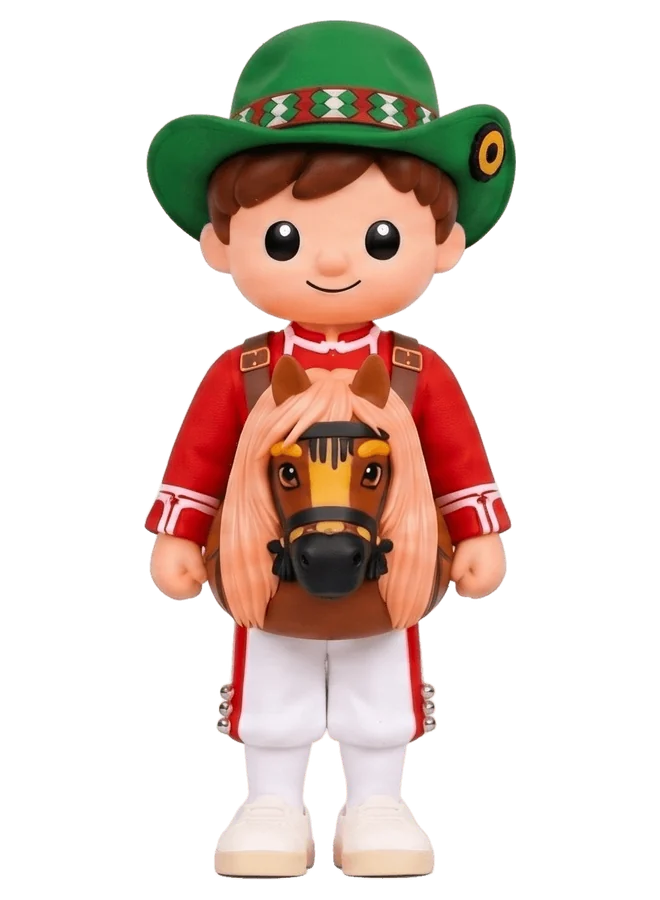
The Cavallet
White espadrilles and stockings, white breeches with a red trim and little bells, a red jacket with white trims and a green hat with the left brim turned up and held with a bow. He wears the horse around his body.
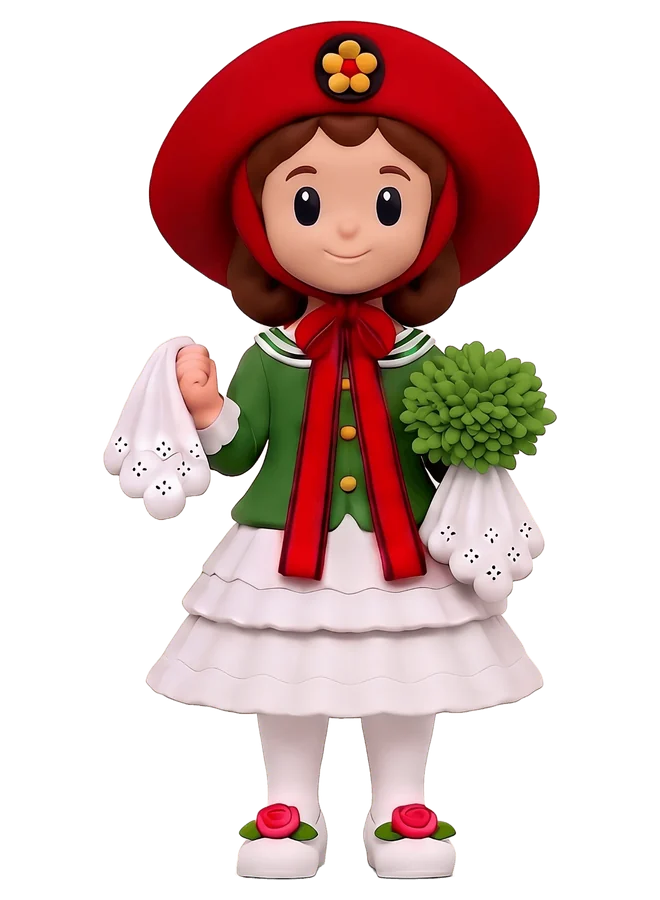
The Dama
White espadrilles with a small pink rosette, about five lace-trimmed skirts, a green jacket and a red hat with the brim turned up and a bow. In her left hand, a sprig of basil; in her right, a small embroidered handkerchief she uses to mark the entrances.
The dances and the music
They dance to the sound of xeremies, flabiol and tamborí. When Felanitx had no xeremiers (pipers) of its own, they were brought from other towns.
- Canvis
- Pas Nou
- Passeig
- Cadenilles
- Potadetes
- Rotllet
- S’Envestida
- Esses velles
- Esses noves
A little history
- 1603The dances appear linked to the founding of the Convent of Sant Agustí in Felanitx.
- 1671Earliest surviving written record.
- 1835Until the confiscation of church property, the Church keeps them going.
- 1881Felanitx Town Council takes them over, and still does today.
- 2015The Consell de Mallorca declares them a Festival of Cultural Interest (plenary session of 8 October).
There are also Cavallets in Pollença and Artà.
Sources
- Viquipèdia (in Catalan): Cavallets de Felanitx
- festes.org (in Catalan): Els Cavallets
- dBalears (in Catalan): Els Cavallets de Felanitx ja són Festa d’Interès Cultural (2016)
If you spot a mistake or want to add something, write to us and we will correct it.
See the Cavallets collection